Jump to business impact ↓
←

veyor · logistics · 2021

A new product for loading docks:From insight to product market fit

  1. 01

    insight

    A new segment with similar needs

    Loading docks face similar issues as construction sites to manage deliveries.

  2. 02

    mvp

    From idea to MVP in weeks

    By identifying the key gaps that needed to be closed to serve loading docks.

  3. 03

    pilot

    Month 1: 2321 users + 4692 bookings

    Extremely positive feedback from loading dock masters, suppliers and couriers.

  4. 04

    revenue

    1st enterprise client signed after the pilot

    To manage the loading docks of 2 shopping centres in Australia with Veyor.

  5. today

    Established business for loading docks

    Veyor has an established product offering for the loading docks segment.

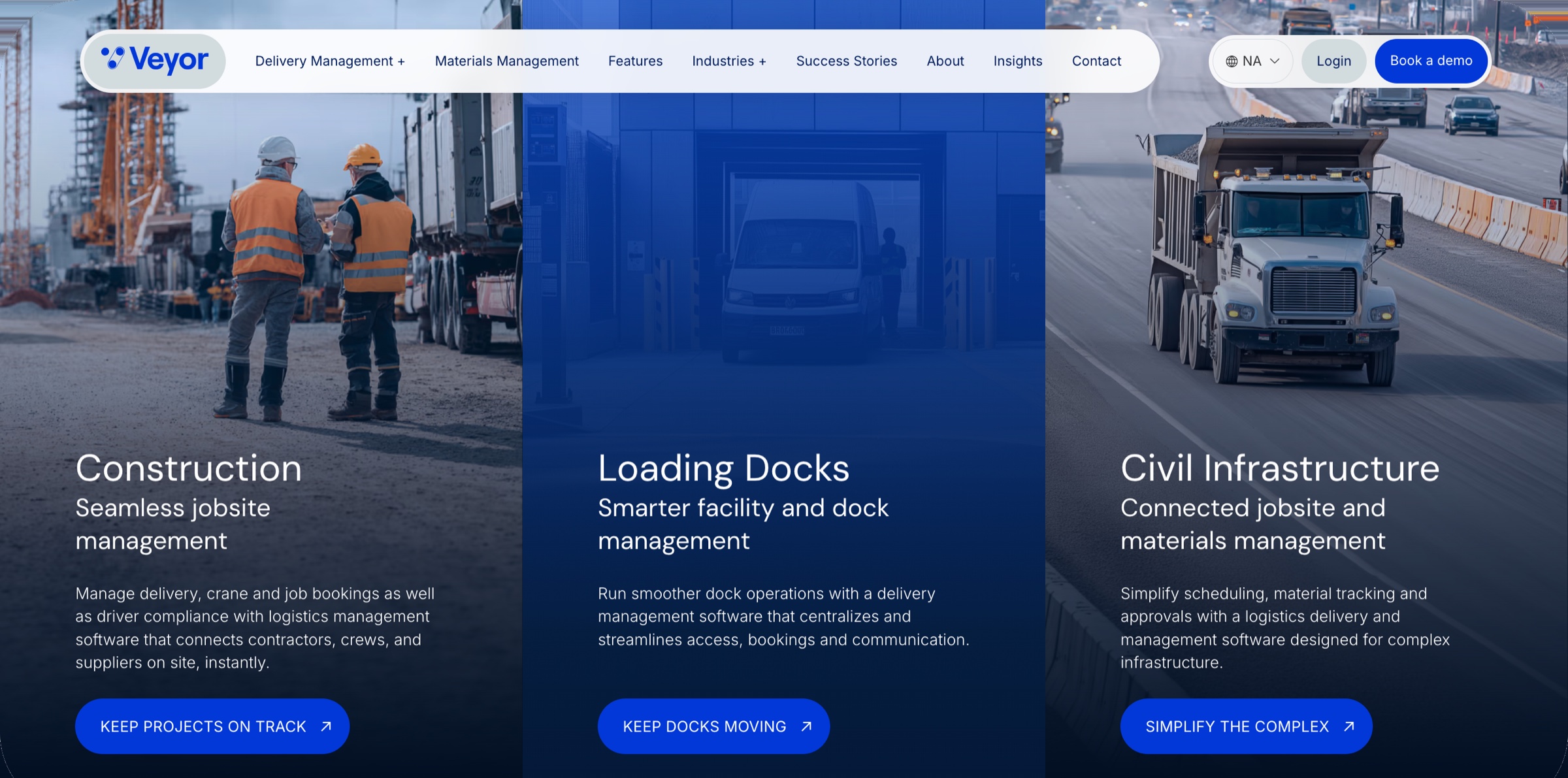
Veyor's solutions page: Construction, Loading Docks and Civil Infrastructure

The context

Veyor is a collaborative scheduling system for the construction industry. It replaces the spreadsheets and whiteboards crews use to coordinate deliveries with one shared schedule.

We identified an opportunity to serve another customer segment, loading docks, with similar needs but better revenue and customer lifetime value so we decided to build an MVP and run a pilot.

  • Research
  • Product strategy
  • UX Design
  • Pilot testing

How much would our product need to change to serve loading docks as a new customer segment?

Milestones

01

Understand how loading docks work

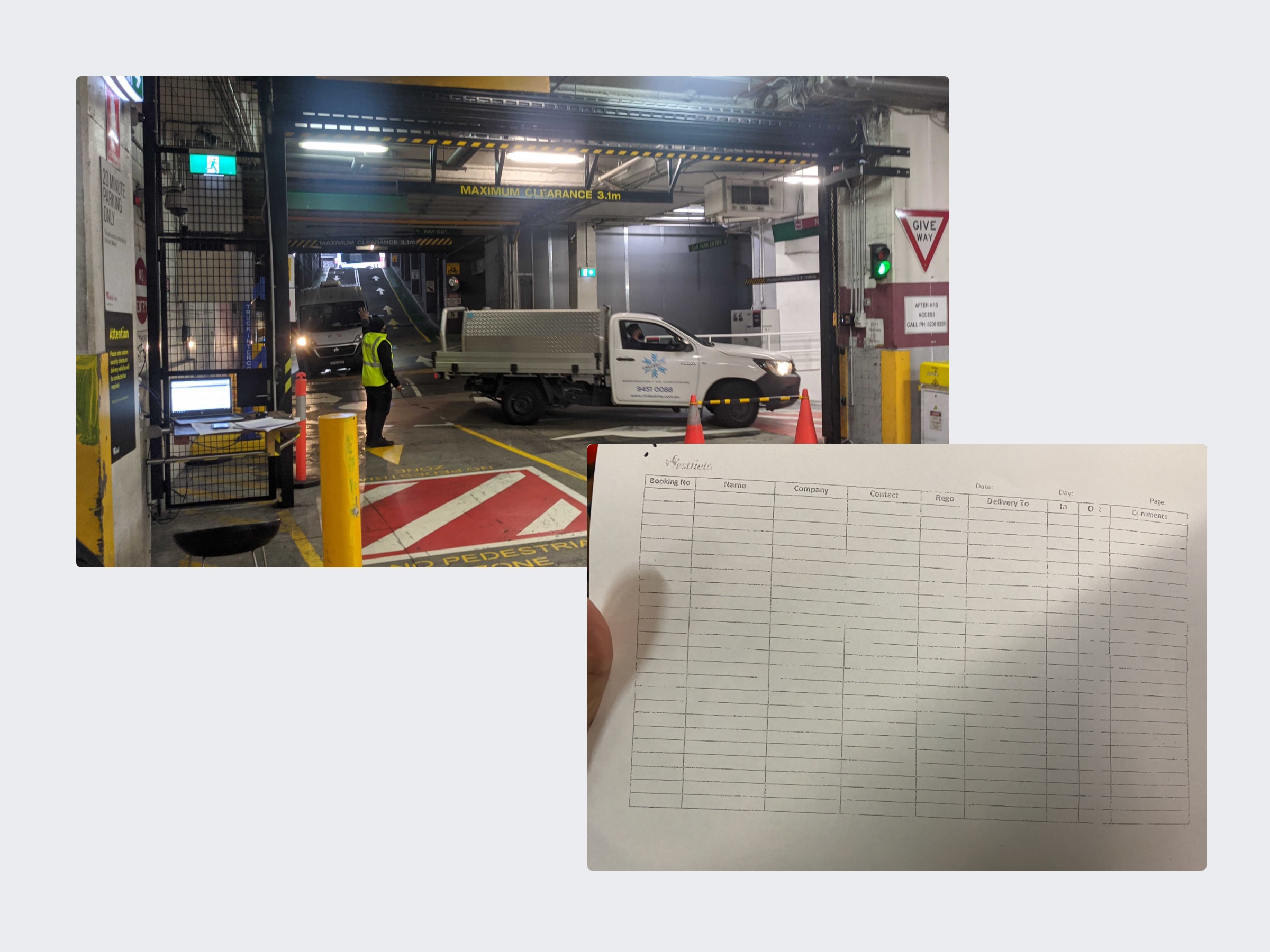
Before deciding what to build, we studied how loading docks actually run, in context and with the people doing the work: loading dock masters, gate controllers, suppliers and couriers.

Docks ran on unscheduled arrivals, phone calls, paper run sheets and legacy software, with no shared view for tenants or carriers and no record of arrival and departure times, so overstays went unchecked.
02

Map the end-to-end customer journey

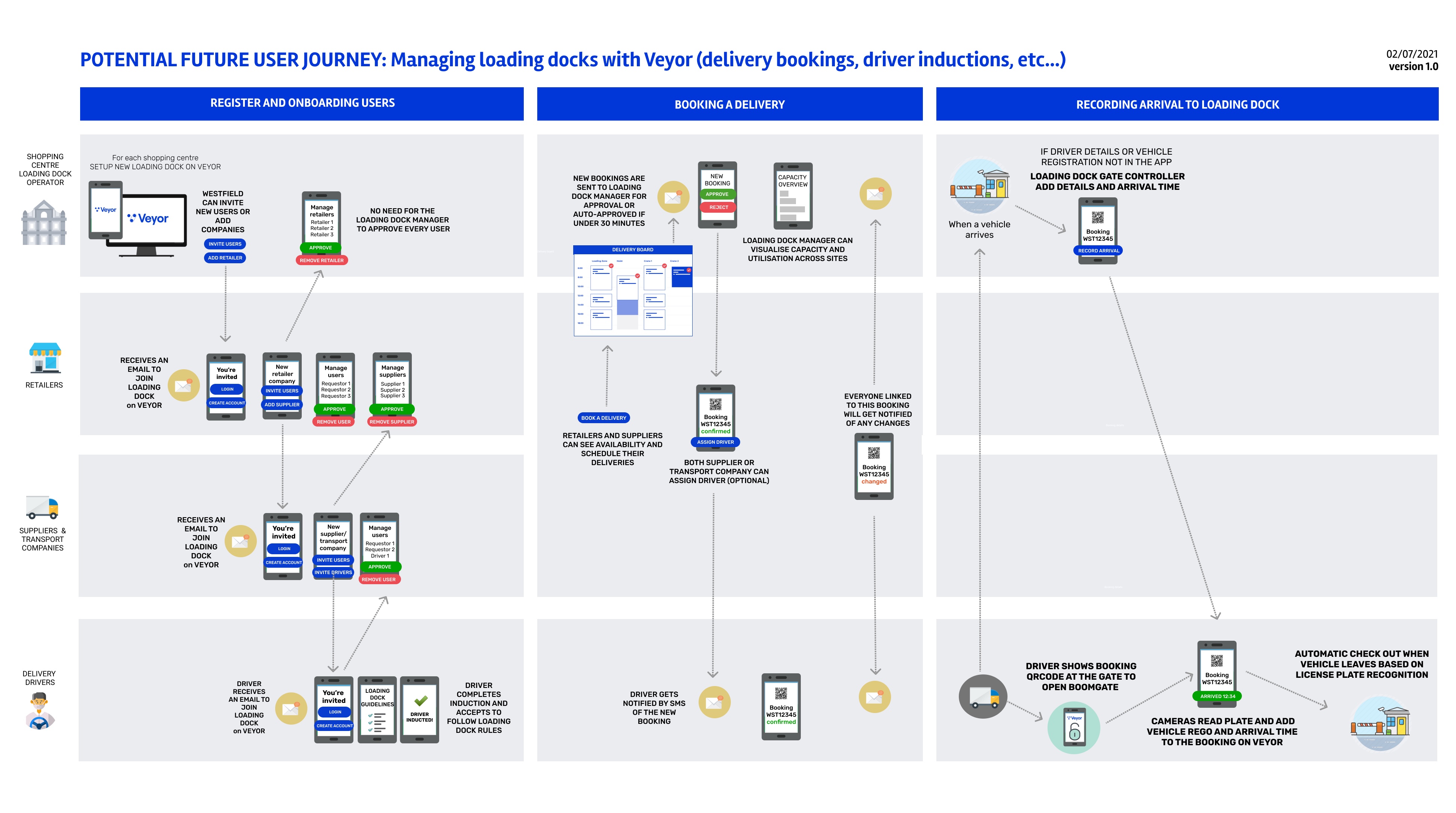
I mapped the end-to-end journey for everyone involved, from the shopping centre operator to retailers, suppliers and drivers: registering and onboarding, booking a delivery, and recording arrival at the loading dock.

First the ideal future experience, then the minimum for Day 1.

03

Identify gaps and opportunities

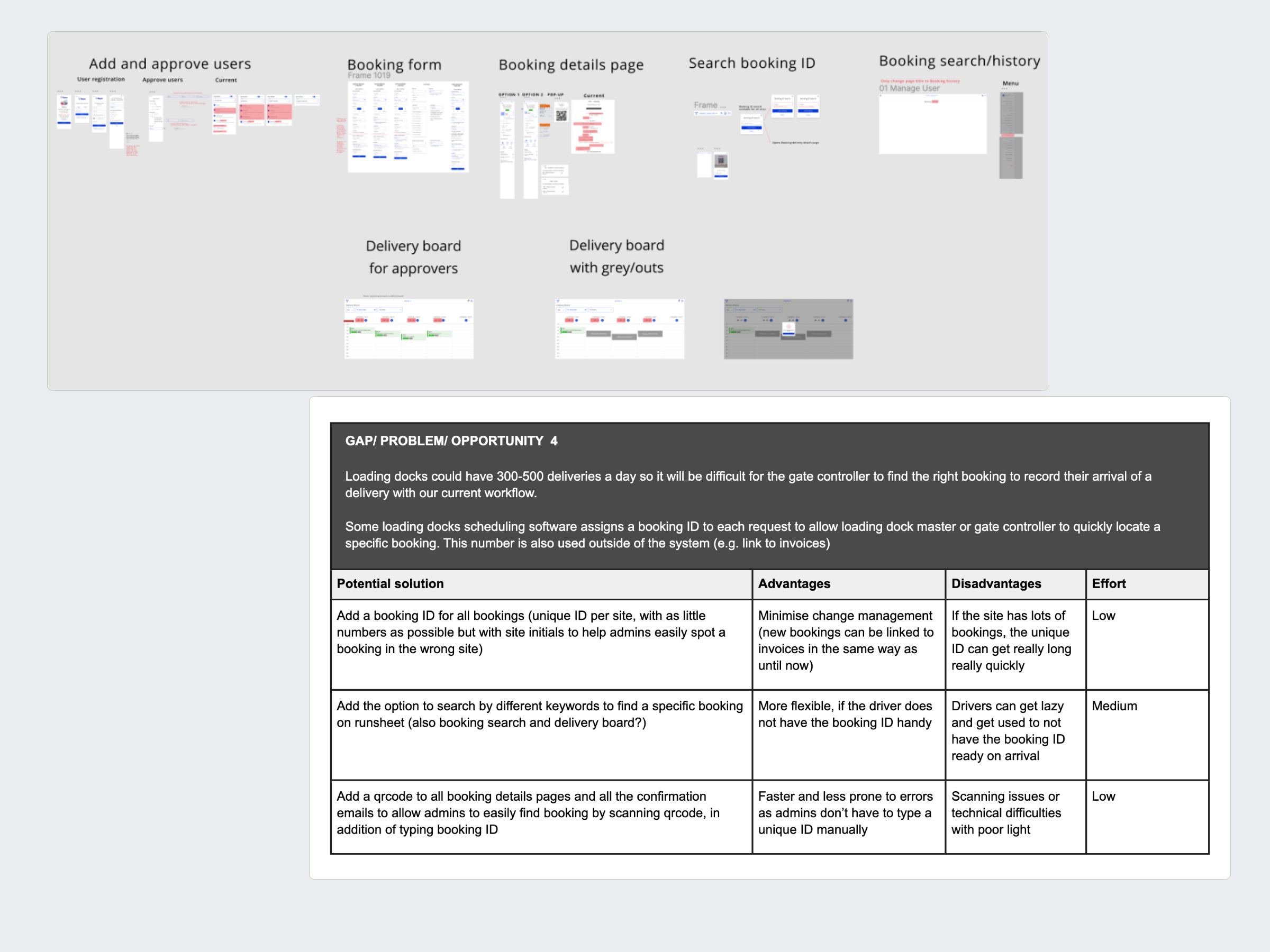
I compared the ideal journey with our existing functionality for construction sites and identified all the gaps. For each gap, I suggested and compared potential solutions, pros, cons and effort, then decided what had to be there on Day 1 and what could wait.

That turned a vague “can we serve this market?” into a plan everyone could build against.

04

Delight users in key moments of truth: at the gate

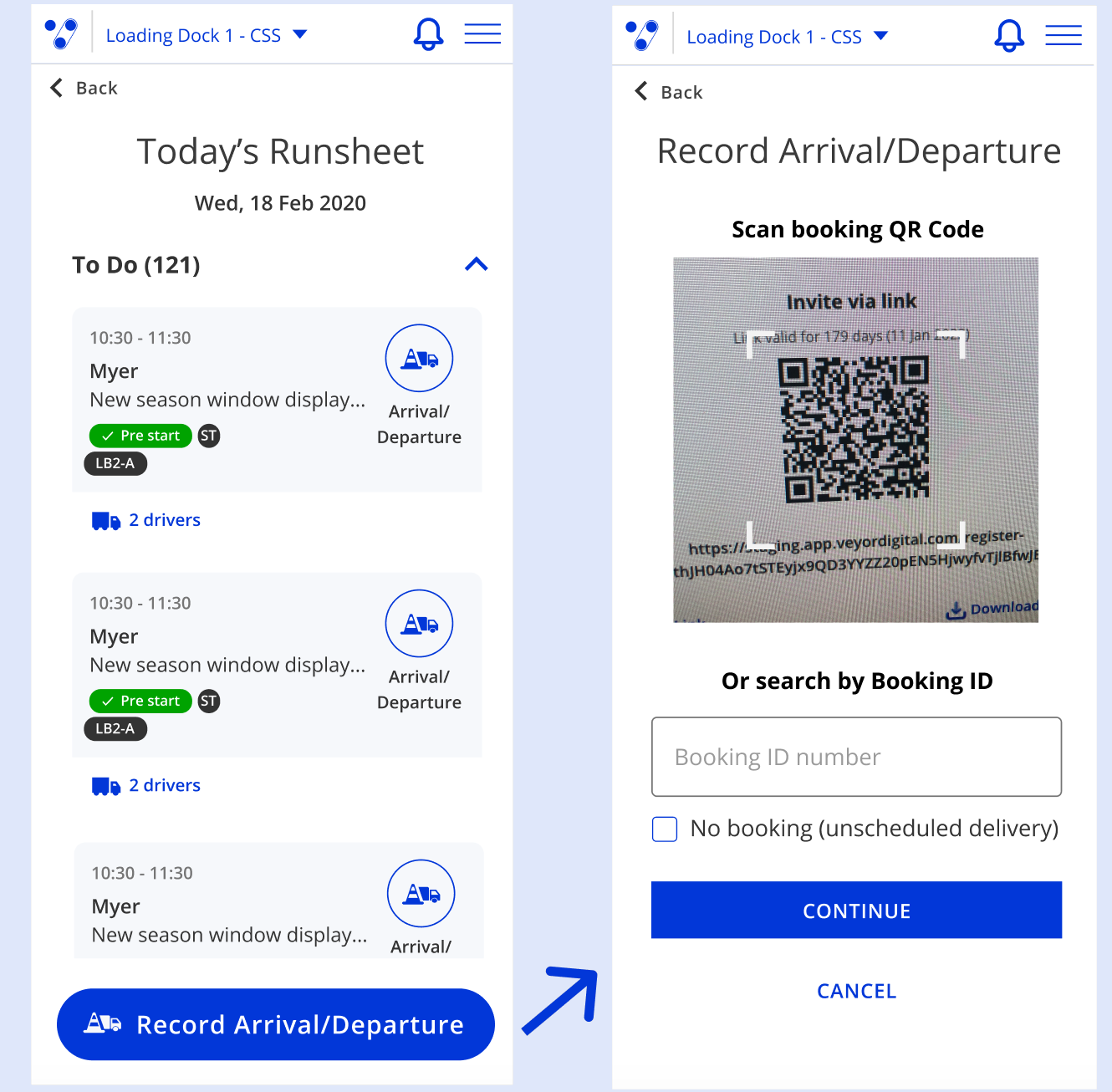
A loading dock can have 300–500 deliveries a day. With our existing workflow, the gate controller would struggle to find the right booking to record each arrival.

The ideal experience: a QR code on every booking and confirmation email, with a built-in scanner at the gate.

The driver shows the QR code to open an automated boomgate, cameras read the plate and add the arrival time to the booking, and check-out happens automatically when the vehicle leaves.

05

Run a pilot to validate PMF (Product Market Fit)

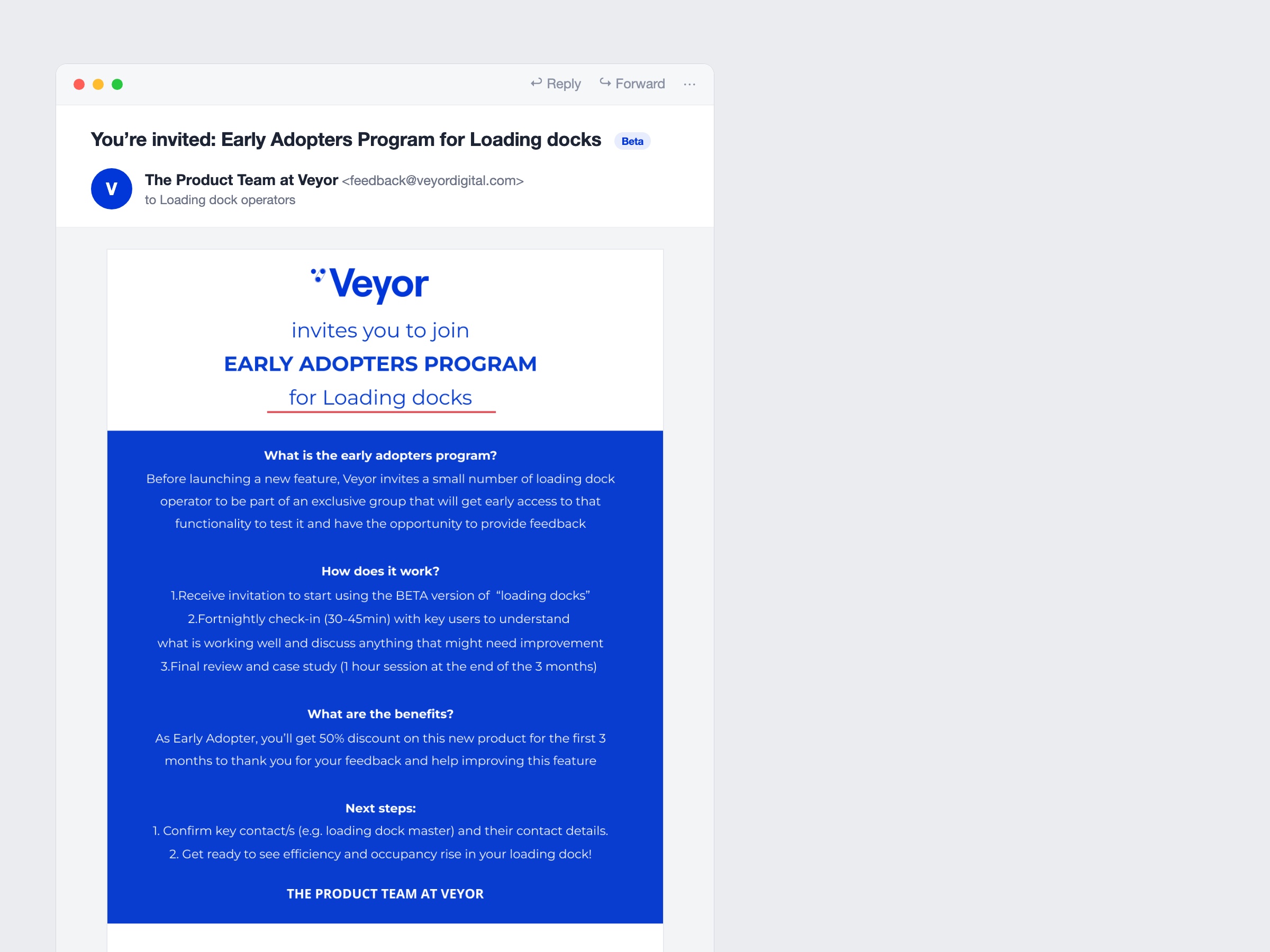
We ran the pilot with a small group of loading dock operators who got early access to the beta and started implementing scheduled bookings for delivery drivers to access their loading docks.

In its first month, the pilot onboarded 2321 users and reached 4692 bookings, and the docks saw what they cared about: fewer unscheduled deliveries, overstays and no-shows, and staff running the dock instead of directing traffic.

It ended with our first enterprise agreement: a shopping centre operator signed to use Veyor to manage the loading docks of 2 of their Australian shopping centres.

Email invitation to the early adopters program + pilot outcomes
Email invitation to the early adopters program + pilot outcomes ↗

Business impact

1/3

Loading docks is now one of three established business lines for Veyor

“I can’t imagine life without Veyor now. Such peace of mind. Everything just flows.”
Michael Green, Operations Manager, Vicinity Centres (Chadstone)

85–90%

Booking compliance

Within two weeks, 70% of vehicles were booking ahead.

150

Vehicles per day

Managed through a single dock, on schedule, without congestion.

Misuse ↓

Unscheduled, no-shows and overstays

By warning and removing booking access from drivers that don't comply.

Success stories

Melbourne Central · The GPT Group

85–90%

Booking compliance, from 70% within two weeks

“I would say overall it’s a very positive move in terms of the relationship with our drivers, logistics companies and with the tenants.”

Nabil Farook, Operations Manager, The GPT Group

Read the success story ↗

Chadstone · Vicinity Centres

~30 bays

Peak trading without congestion

“I can’t imagine life without Veyor now. Such peace of mind. Everything just flows.”

Michael Green, Operations Manager, Vicinity Centres

Read the success story ↗

My personal contributions

01

Hands-on (IC) product design

I ran the initial research, created the journey map, proposed solutions for the gaps and designed the MVP for the pilot.

02

User research

I trained Veyor team members in user research methods, best practices and biases to avoid when talking to customers.

03

Product management

I turned how we approached loading docks into a product playbook for the team to go from idea to product market fit.

let's talk

Looking to validate a new business idea?

I can help you scope the MVP, run the pilot and prove there’s a business in it.

Elena Sanchez